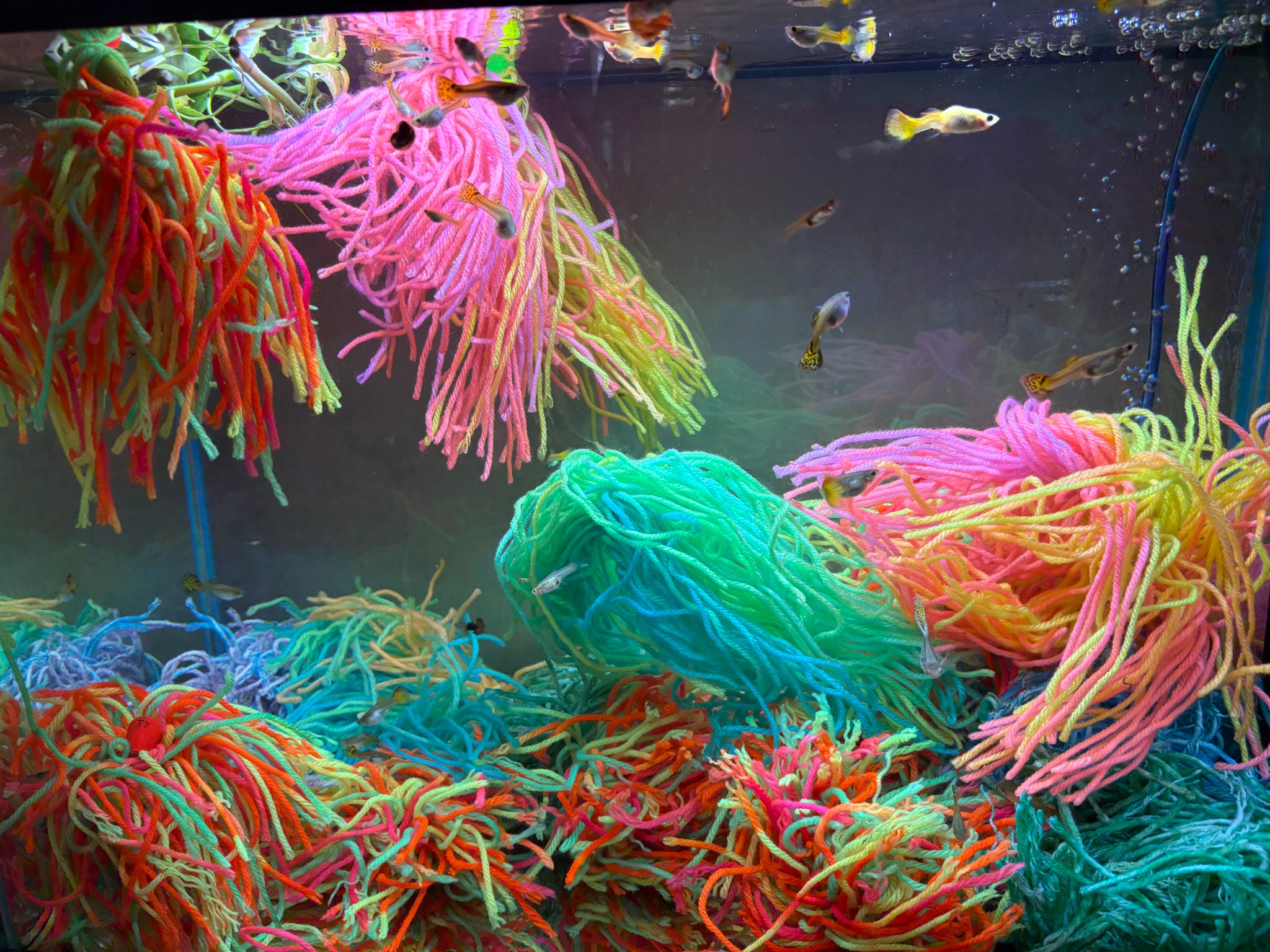
Beautiful in your tank. Useful beyond the view. AquaNest mops bring flowing color, soft cover and a network of surfaces where aquarium biofilm can develop. Once a mop has matured in a healthy, established aquarium, moving it to a new tank may help carry some of that microbial community with it.
Choose your colors ↗ See them in our aquariums
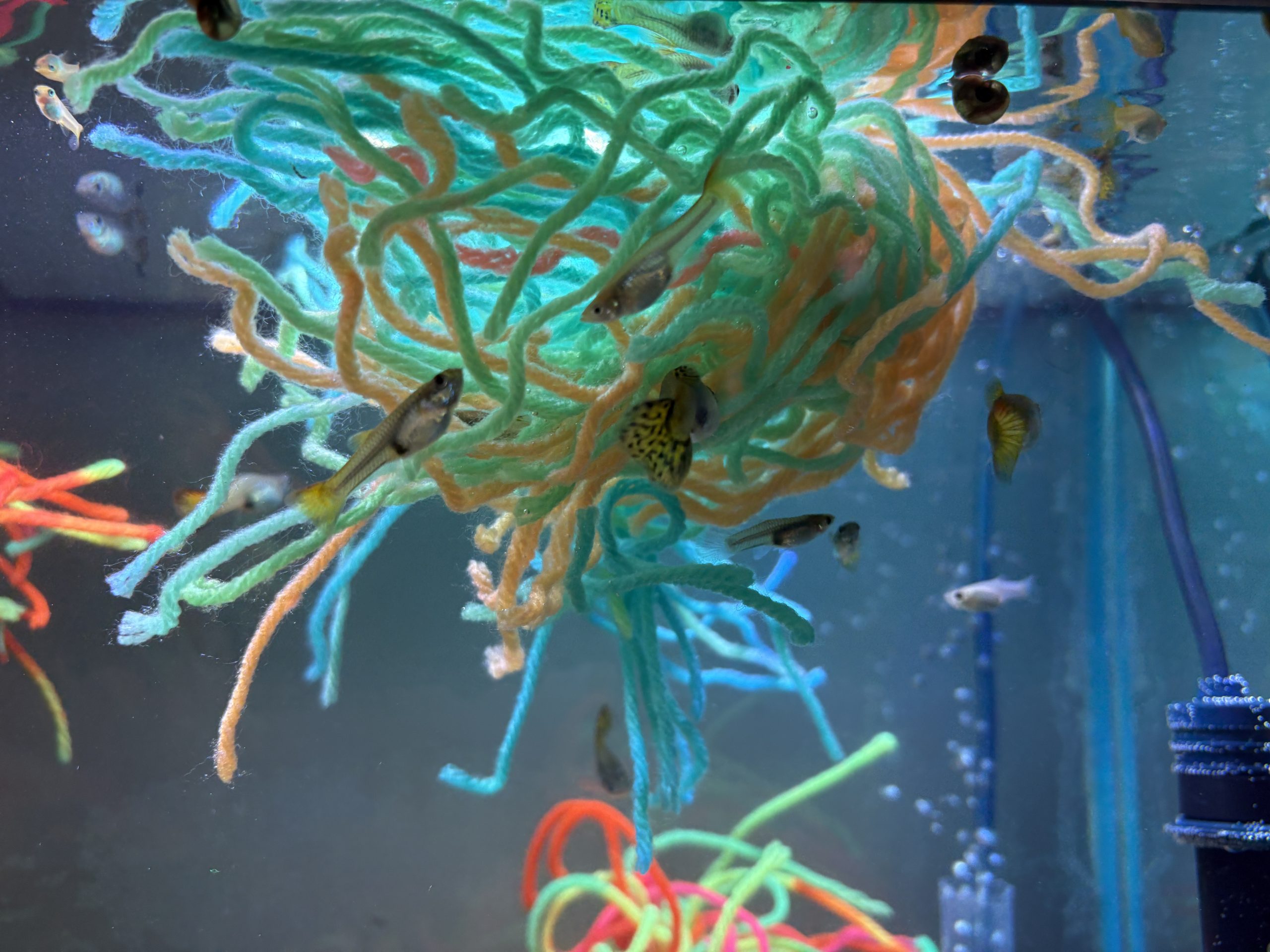
A surface for life—not just a splash of color
In aquarium biology, a substrate can mean a surface that microorganisms attach to, not only the gravel on the bottom. Mop strands provide that kind of attachment surface. Biofilm is a community of microorganisms that develops on submerged surfaces; some of its inhabitants help process waste, while others form part of the grazing world explored by shrimp.
Color with purpose
Compose an aquarium that feels like art while adding cover and places for fish and shrimp to explore.
More surfaces to colonize
Many individual strands offer attachment sites. Grouping mops adds more surface and denser cover without waiting for plants to grow.
Easy to move and reuse
Lift out an individual mop when needed. After checking for animals and eggs, gently rinse away loose debris in removed aquarium water.
What are beneficial nitrifying bacteria?
Nitrifying microorganisms help turn ammonia from waste into nitrite, then nitrate. They grow on aquarium surfaces, especially where oxygen and water circulation support them. Establishing enough of this biological activity for the intended livestock is part of cycling a tank. It is different from acclimating a fish to new water.
Can an established mop help seed a new aquarium?
It can potentially contribute. Transferring mature filter media or substrate is an established aquarium-seeding method. Applying that principle to a colonized mop is reasonable, but we have not measured AquaNest mops’ bacterial capacity or how many days they save. A new mop arrives unseeded; time in a healthy aquarium allows colonization.
Think of a mature mop as a transferable surface that may give a new setup a head start, alongside a proper filter and a monitored cycling process. It does not establish a guaranteed stocking capacity or replace biological filter media.
How to transfer a mature mop
- Choose a healthy donor tank. Avoid transferring from a tank with disease, unexplained losses or unwanted pests: these can travel with the mop too.
- Prepare the receiving aquarium. Use conditioned water, an operating filter, circulation and appropriate temperature. Keep the donor tank’s filtration intact.
- Check, then move promptly. Look carefully for eggs, fry, shrimp and snails. Keep the mop wet in aquarium water during the short transfer; do not let it dry out or disinfect it if you want to preserve its microbes.
- Place it where water can circulate. Leave open swimming space. Multiple mops can form a soft cover area, but keep them clear of filter intakes.
- Let testing determine readiness. Follow a fishless cycling method and test ammonia and nitrite. Zero readings without a waste source do not prove the tank can support fish. Add livestock gradually only after the system can process the planned load.
Easy care for an established mop
Check for animals and eggs, then gently swish the mop in removed tank water to release debris. Avoid soap, disinfectants and hot or chlorinated water when preserving the biofilm. Clean individual mops as needed rather than aggressively scrubbing every colonized surface at once.
Build a beautiful habitat now. Plan for your next tank.
Choose a coordinated palette and group several AquaNest mops for flowing texture, layered cover and a look that is unmistakably yours. Every retail mop includes a suction cup, with floating and non-floating options available.
Create your aquarium palette ↗Further reading: Aqueon: beneficial bacteria; Aquarium Co-Op: aquarium cycling and established media. These explain general aquarium biology; they are not tests or endorsements of AquaNest mops.