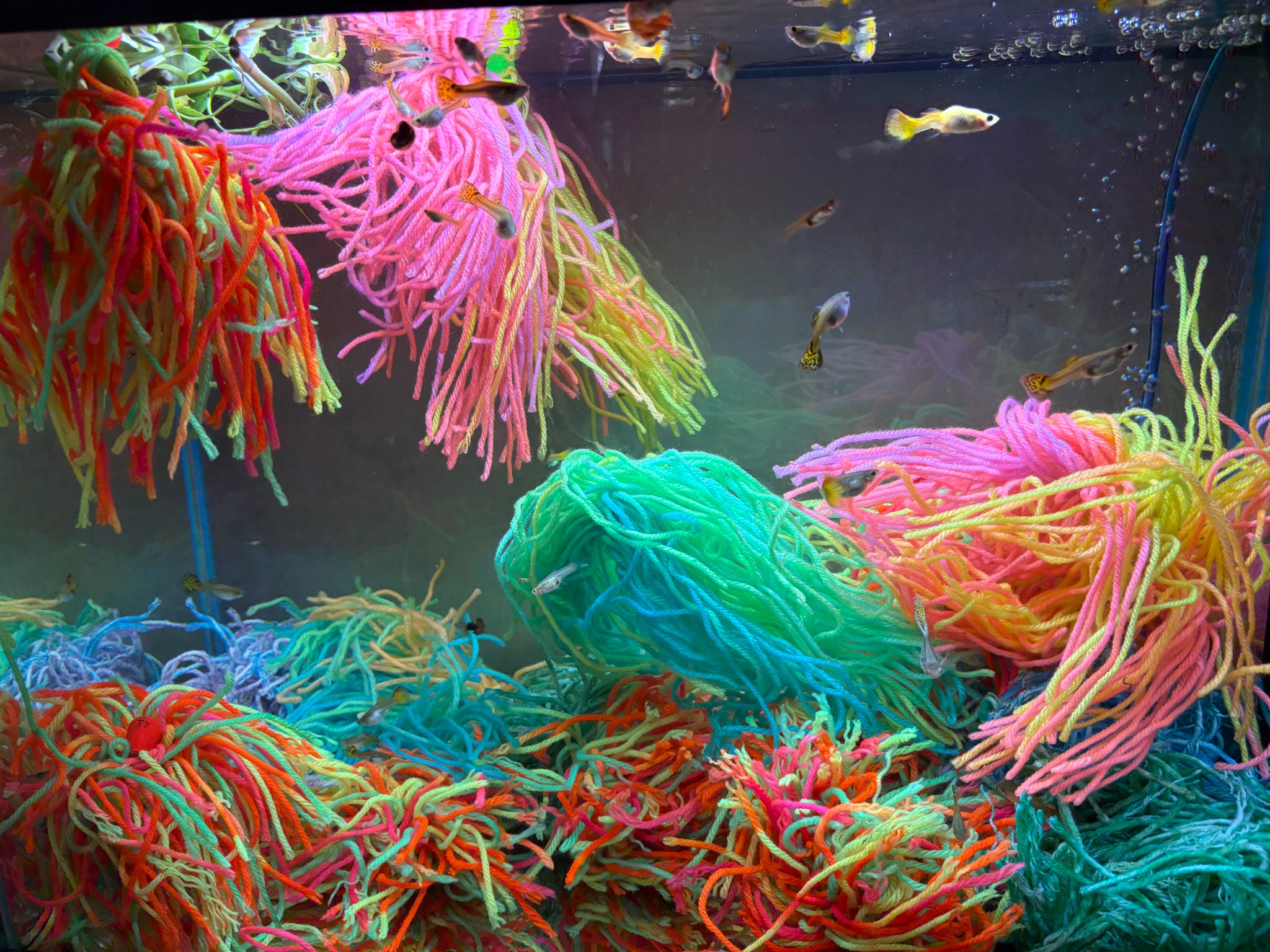
The cover you want, without waiting for plants to fill in. AquaNest spawning mops add dense, movable structure to a breeding or shrimp tank from the moment you position them. Live plants grow and change; an AquaNest mop gives you a reusable structure you can place, lift out and clean.
Both can have a place in the same aquarium. Here is how their life cycles and upkeep compare.
Live plants: establish, grow and renew
Aquarium plants are living organisms. With suitable light, carbon and nutrients, they produce new tissue. Depending on the species, they may spread through runners, cuttings or division. Older leaves eventually die and need removing; healthy new growth can take their place.
Plants use nutrients as they grow and release oxygen during photosynthesis. Their growth and appearance depend on the species and tank conditions. Tropica explains the relationship between plant growth, nutrients and carbon dioxide.
AquaNest mops: position, condition, clean and reuse
AquaNest mops are ready to position. Their soft strands do not need to root, grow or be pruned before it offers structure. Approximately 200 strands create a dense arrangement that you can position with the included suction cup.
Over time, the submerged surfaces can develop biofilm. That living coating changes even though the mop itself is not alive. For shrimp keepers, this makes a conditioned mop an additional place to graze. Explore the biofilm guide.

Compare them in your aquarium
| What matters | Live aquarium plants | AquaNest mops |
|---|---|---|
| Getting started | May need time to establish and fill out. | Structure is already there; rinse and position. Biofilm needs time to develop. |
| Growth | Grow and change with conditions. | Keep their structure without plant growth or pruning. |
| Placement | Depends on rooting or attachment needs. | Floating and non-floating options, plus a suction cup for positioning. |
| Grazing surfaces | Leaves, stems and roots can host biofilm. | Many separate strands provide additional surfaces for biofilm. |
| Routine care | Remove dead leaves and trim as needed. | Check for debris, tangles and wear; clean when needed. |
| Biological role | Living plants use nutrients and photosynthesize. | The mop provides structure. It does not photosynthesize or replace filtration. |
| Long-term use | Healthy plants can keep producing new growth. | Reuse while the mop remains in good condition; replace damaged or persistently tangled mops. |
Choose the setup that works for you
Want an evolving planted display? Keep the plants you enjoy. Want a removable spawning surface or a repeatable arrangement in a breeding tank? Add a mop where you need it. Want both? Place a mop beside established plants to add structure while keeping the benefits of living greenery.
Acrylic does not go through leaf growth and decay. Inspect your reusable mop for wear during routine maintenance and follow the care guide.
Make room for your next spawn
Choose a color that suits your aquarium, select floating or non-floating, and position the strands where your fish or shrimp use them.