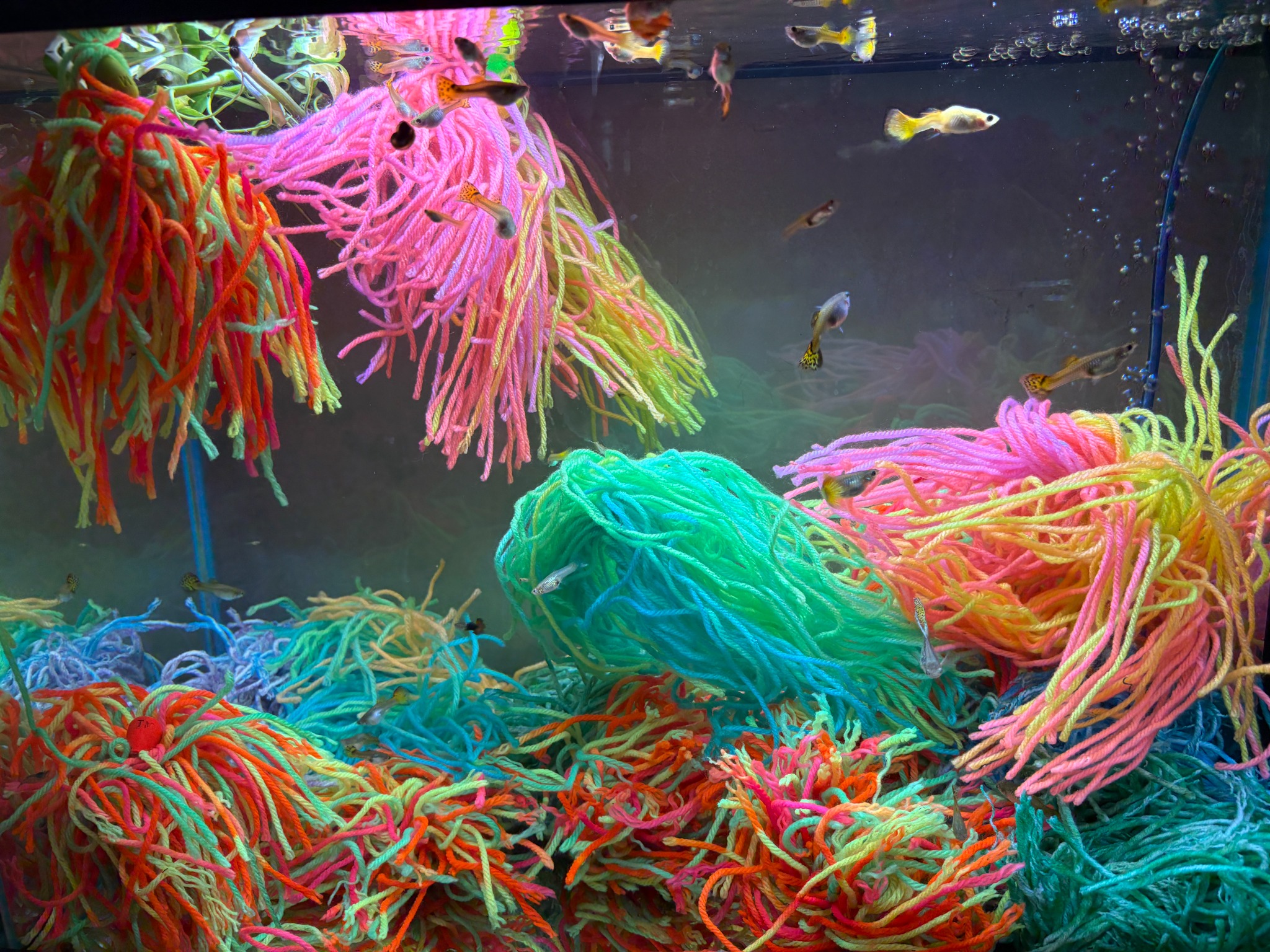
More strands to explore. More surfaces to graze. More cover for tiny shrimp. Add a colorful AquaNest mop to your shrimp aquarium for reusable structure that is easy to position and easy to clean.
Use several mops as removable bottom cover
Several non-floating mops can create removable bottom cover with extra grazing surfaces in a suitable shrimp tank. Start with separate patches so you can spot uneaten food and clean beneath them. Mops do not replace a buffering substrate where your shrimp species needs one, or the tank’s mature filtration.
Easy cleaning is part of the setup: check for eggs and animals, lift an empty mop by its center tie, swish it in removed aquarium water and siphon the exposed bottom. No soap. See the multiple-mop bottom-cover guide.
Watch shrimp among our soft strands
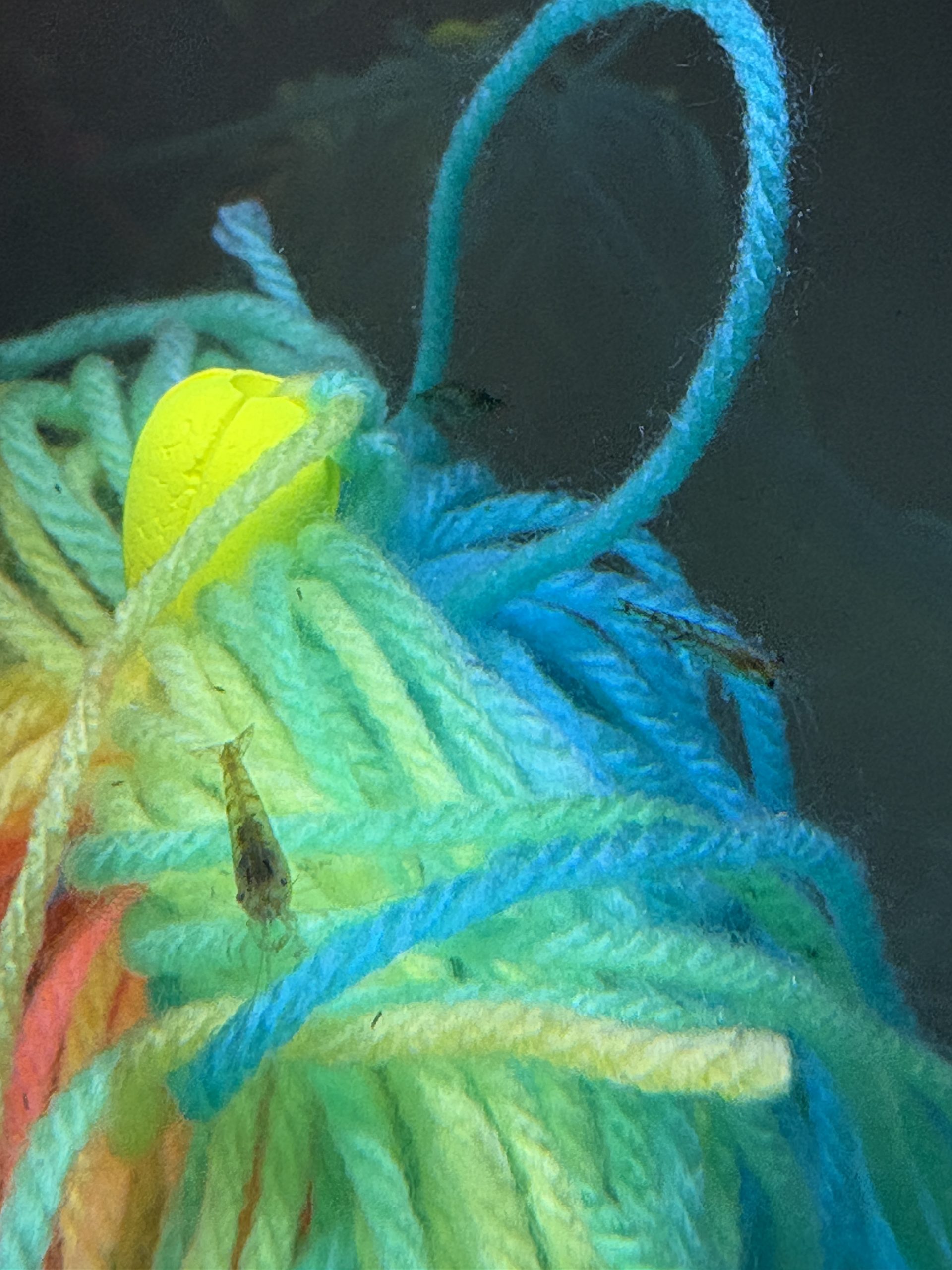
Everyday shrimp keeping: bring the habitat into view
A mop creates a network of submerged surfaces where shrimp can climb and explore. Position it near the front or side of the tank to make those tiny movements easier to enjoy. Choose colors you love, then select floating or non-floating to suit your layout.
A grazing surface that develops with your tank
In an established aquarium, biofilm can grow on submerged strands. A mop’s many individual strands add surface for that community to develop, giving shrimp extra places to graze. Let a new mop condition in the tank and keep providing appropriate shrimp food. Our biofilm guide explains how to get started.
Breeding shrimp: give the little ones cover
For cherry shrimp and other Neocaridina, the spaces between loose strands offer cover that small shrimp can explore close to grazing surfaces. A mop is a useful addition to a mature breeding setup with stable water conditions and gentle filtration. A shrimp-only aquarium is the better choice when maximizing baby-shrimp survival is the goal; cover cannot exclude hungry fish.
See more of our shrimp aquarium
Easy to lift out. Easy to clean.
During routine tank maintenance, lift the mop out carefully, swish it in removed aquarium water to release trapped debris, and return it to position. Check for fish, fry or shrimp among the strands first. No roots to replant and no substrate to dig through. See our step-by-step mop cleaning guide for deeper cleaning between uses.
For regular shrimp-tank cleaning, a gentle swish removes loose waste while preserving more of the established surface community than disinfection would. Never use soap, and inspect the mop closely for shrimplets before lifting it out.
New to shrimp? Aquarium Co-Op’s cherry shrimp care guide covers the wider setup and feeding needs. Ready to add cover? Our mop buyer guide helps you choose.