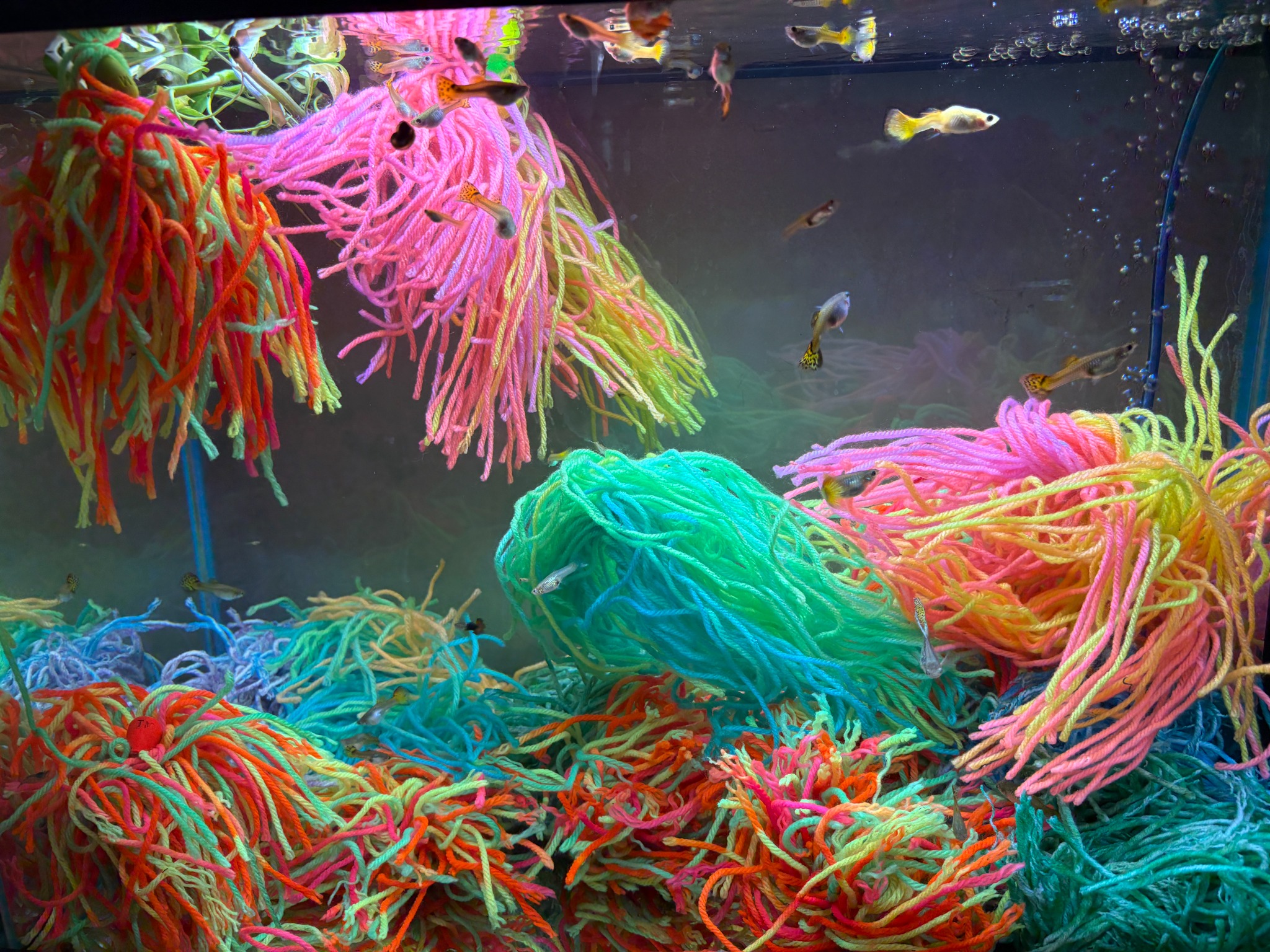
Watch a cherry shrimp work its way along a plant or a piece of wood: it keeps picking at the surface. Much of that grazing happens on biofilm, the thin community of microorganisms and organic material that develops on submerged surfaces. For a shrimp breeder, those surfaces are part of the feeding environment.
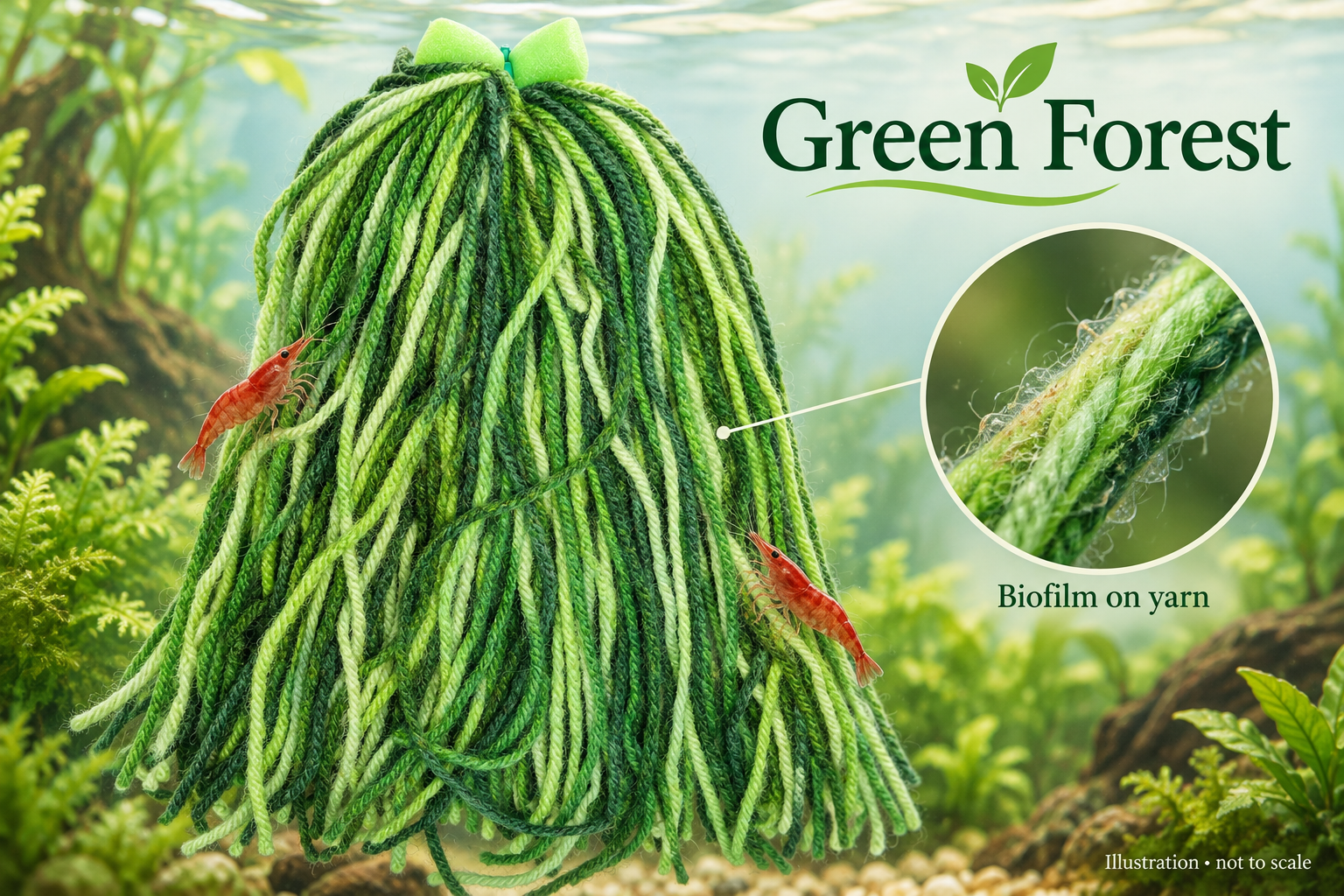
A spawning mop gives biofilm many strands to colonize in a compact space. AquaNest mops contain approximately 200 strands of acrylic yarn. Once conditioned in an established aquarium, those strands can become additional grazing surfaces for adult shrimp and their young.
Illustration: our Green Forest floating mop. Shop Green Forest.
Watch shrimp explore the yarn
See more of our real aquarium videos.
Why biofilm matters in a shrimp breeding tank
Biofilm can include bacteria, microscopic algae and other tiny organisms. Its composition changes with the aquarium and the surface it grows on. It is a living community, rather than one specific food.
Research on Neocaridina davidi, the species that includes cherry shrimp, has examined reproduction and juvenile development in biofilm-based systems. A 2020 study found that shrimp could complete their life cycle in the tested system, with outcomes varying between artificial substrates. This supports the value of established grazing surfaces, but the study did not test AquaNest mops. Read the research on Neocaridina and biofilm.
In a home tank, treat a conditioned mop as one part of the habitat alongside appropriate feeding, filtration and stable water conditions. Adding a mop alone is not a promise of more babies or a particular survival rate.
How yarn adds so much usable surface
A mop is more than the outline you see from the front. Every strand has a surface running along its length and around its circumference. Spread those strands out underwater and the aquarium gains many separate places for organisms to attach and shrimp to explore.
That is the practical appeal of approximately 200 strands: a large amount of distributed surface in a small footprint. Water and shrimp need access between the strands, so a loosely arranged mop is more useful for grazing than a tightly compressed bundle.
We have not measured a square-foot figure or a biofilm growth multiplier for our mops. The benefit we can describe is the structure itself: numerous submerged yarn surfaces, with room to position them where you can observe and maintain them. The acrylic supports growth on its surface; it is not food for shrimp.
Setting up a mop for shrimp grazing
- Start with an established shrimp aquarium. A new mop does not arrive with a mature food supply. Give it time to condition in the tank before relying on it as a grazing area.
- Rinse before use. Use clean, dechlorinated water and no soap. Separate the strands gently.
- Choose an accessible position. Use the included suction cup to place the mop where shrimp can reach it and you can inspect it. Keep strands away from filter intakes and leave space for water movement.
- Watch the shrimp and the mop. Look for grazing activity and check for accumulated debris. There is no universal number of days when every mop becomes fully conditioned.
Floating or non-floating?
Choose the version that suits your layout. A floating mop suspends strands from the surface; a non-floating mop gives you another option for positioning them lower with the suction cup. New non-floating yarn may take time to wet and settle. For shrimp, accessible placement and maintenance matter more than choosing a color.
Keep the grazing area clean without starting over
If debris collects, check carefully for tiny shrimp before moving the mop, then gently swish it in removed aquarium water. Routine debris removal and disinfection are different jobs: disinfecting a mop also removes the established community you are trying to keep. Follow a separate cleaning procedure when equipment needs to move between tanks.
Continue providing suitable shrimp food and monitoring water quality. Do not overfeed to force biofilm growth. A species-only shrimp tank also avoids the baby-shrimp predation risk posed by many fish. Aquarium Co-Op’s cherry shrimp care guide covers feeding, habitat and breeding basics.
Add a grazing surface to your setup
Explore the AquaNest Green Forest spawning mop, or browse all mop colors and select floating or non-floating on the product page. For setup questions, visit our spawning mop FAQ. You can buy as a guest without creating an account.