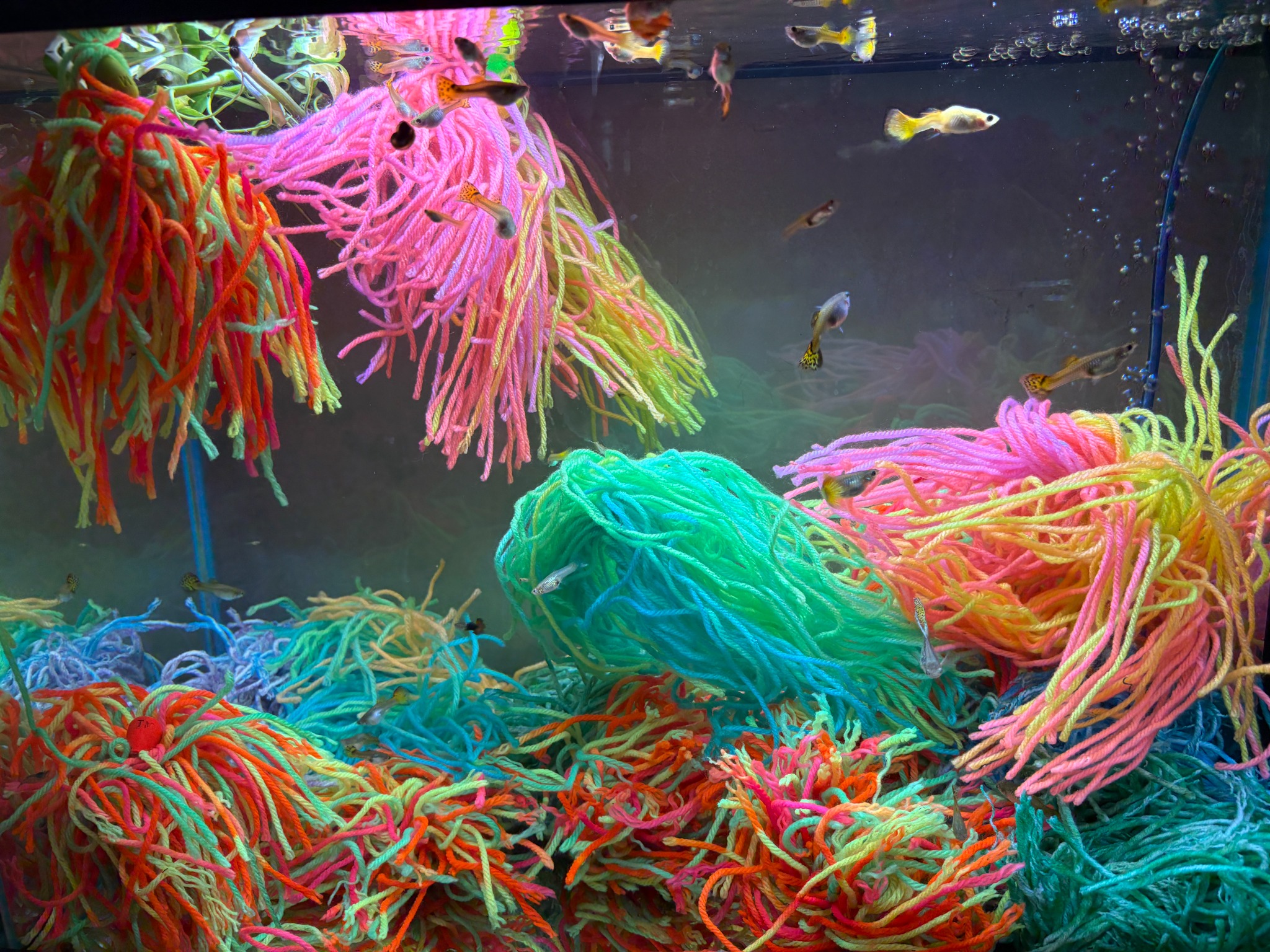
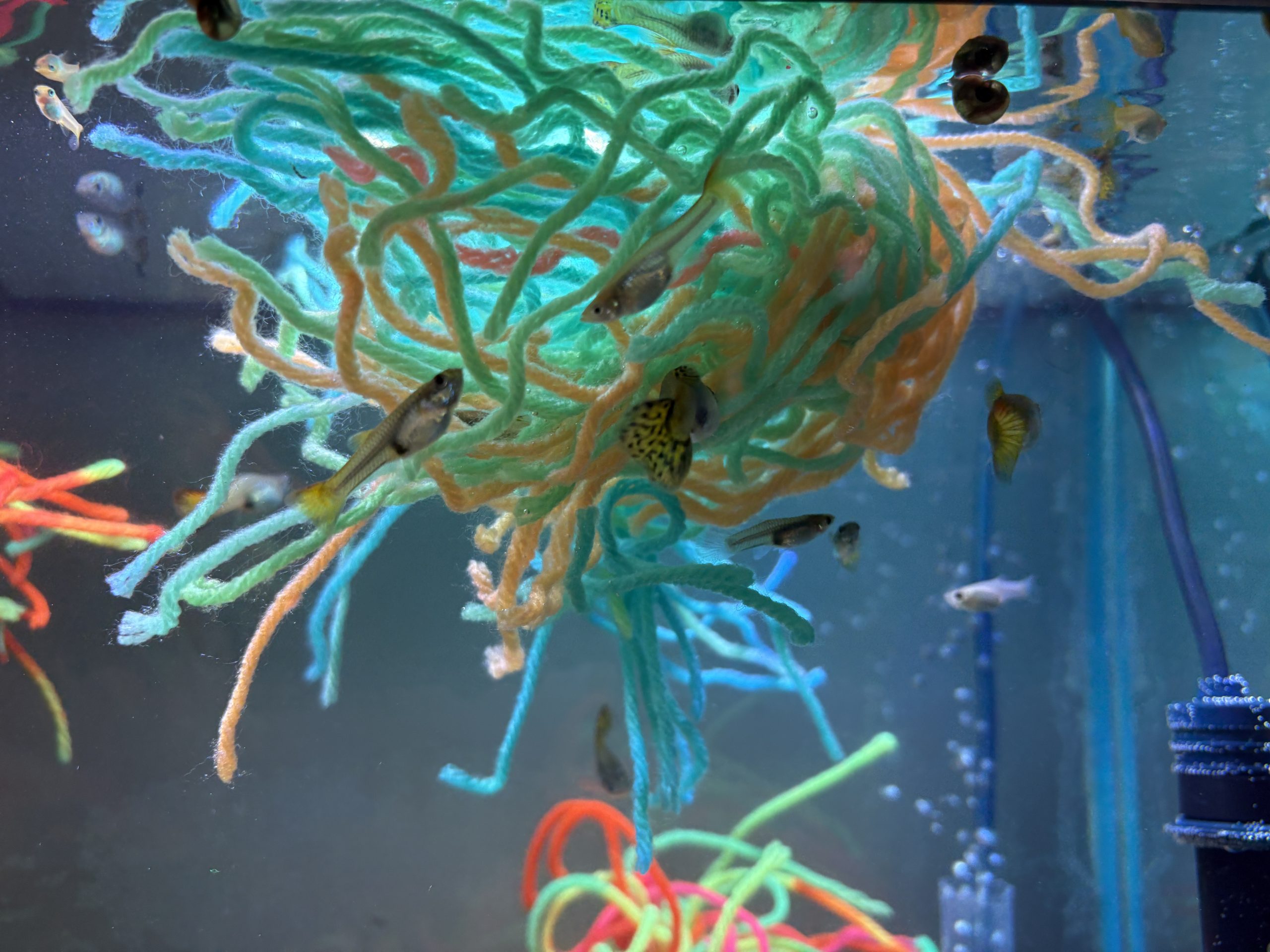
Give your smallest fish somewhere to retreat—and a feeding routine that reaches them. A group of AquaNest mops adds flowing color and soft cover to a breeding setup. The next step is making sure the babies can find food without turning their hiding place into a pocket of leftovers.
First, choose the right breeding setup
Livebearers: guppies, platies and mollies give birth to swimming fry. Several mops grouped together can offer places to retreat in a shared tank. Adults may still eat fry; use a separate, properly prepared grow-out tank when greater separation is your goal. See our guppy cover guide.
Egg-layers: for suitable mop-spawning species, collect eggs by moving the egg-bearing mop to a prepared hatching setup. Leave the adults behind. Feeding starts at the appropriate developmental stage for that species; newly hatched fry may initially rely on their yolk sac. Read our egg-collection guide.
Match the food to the mouth
Many livebearer fry can take newly hatched baby brine shrimp or appropriately sized prepared fry food. Tiny fry from some egg-laying species need smaller first foods, such as suitable infusoria cultures. “Baby fish” is not one feeding category: confirm the needs of your species and watch whether the fry actually swallow what you offer. Aquarium Co-Op’s guide to tiny fry foods explains the different options.
Arrange cover with a reachable feeding edge
Try grouping mops along part of the tank rather than filling every open space. Leave an edge where you can see the fry and place small portions nearby. This is a practical layout suggestion, not a tested formula for a particular number of fry.
- Use floating mops for hanging cover near the surface, or non-floating mops for lower cover once soaked.
- Keep strands clear of filter intakes and leave water circulation and swimming routes open.
- Use a pipette for suitable suspended foods if needed, dispensing gently beside the cover rather than blasting into the strands.
- Observe for a few minutes. Food falling into an empty corner is not the same as food reaching the fry.
Small meals, followed by a quick check
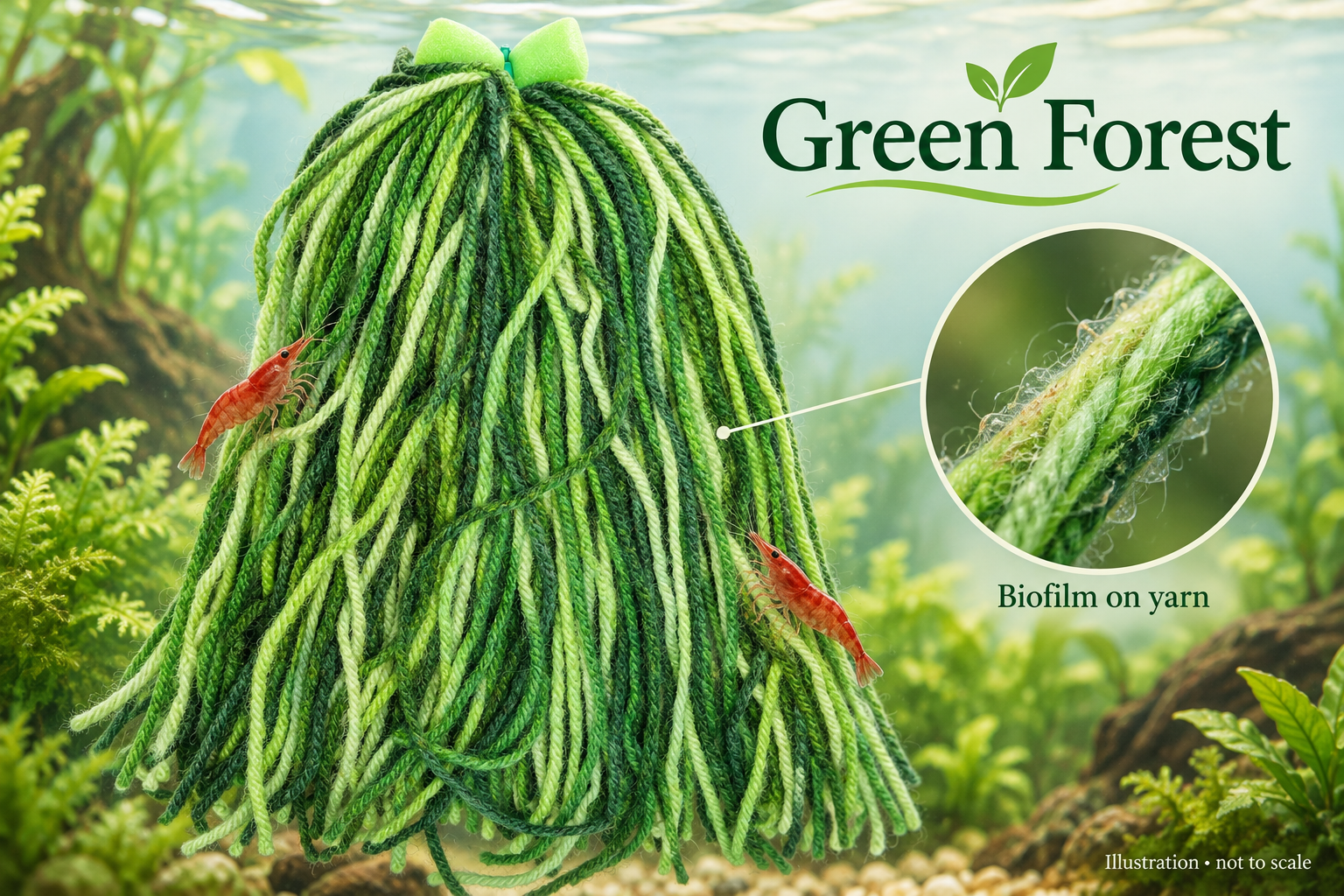
Fry often need several small meals spread through the day. The amount and frequency depend on species, size, food and water quality. Start with a tiny portion, look for feeding activity, and remove uneaten food before it accumulates. Keep up appropriate water testing and careful water changes. A mature biofilm may offer grazing opportunities, but it is not a measured or complete fry diet.
Keep the mops easy to clean
A removable habitat makes routine inspection simpler. Before lifting any mop, check carefully for eggs, fry, shrimp and snails. Gently swish an empty mop in removed aquarium water to release debris, then return it to position. Use no soap. Leave an egg-bearing mop in its appropriate hatching setup rather than rinsing it as part of ordinary cleaning. Our cleaning guide covers care in more detail.
Make a habitat you enjoy watching
Choose a coordinated palette, group the mops into useful cover, and keep a clear view of the feeding area. AquaNest mops are washable and reusable, with floating and non-floating options and a suction cup included. Explore Purple Reef or browse all colors to build your own arrangement.
Further reading: Aquarium Co-Op: raising baby fish and breeding egg-scattering fish. These sources support general husbandry guidance, not an endorsement of AquaNest.