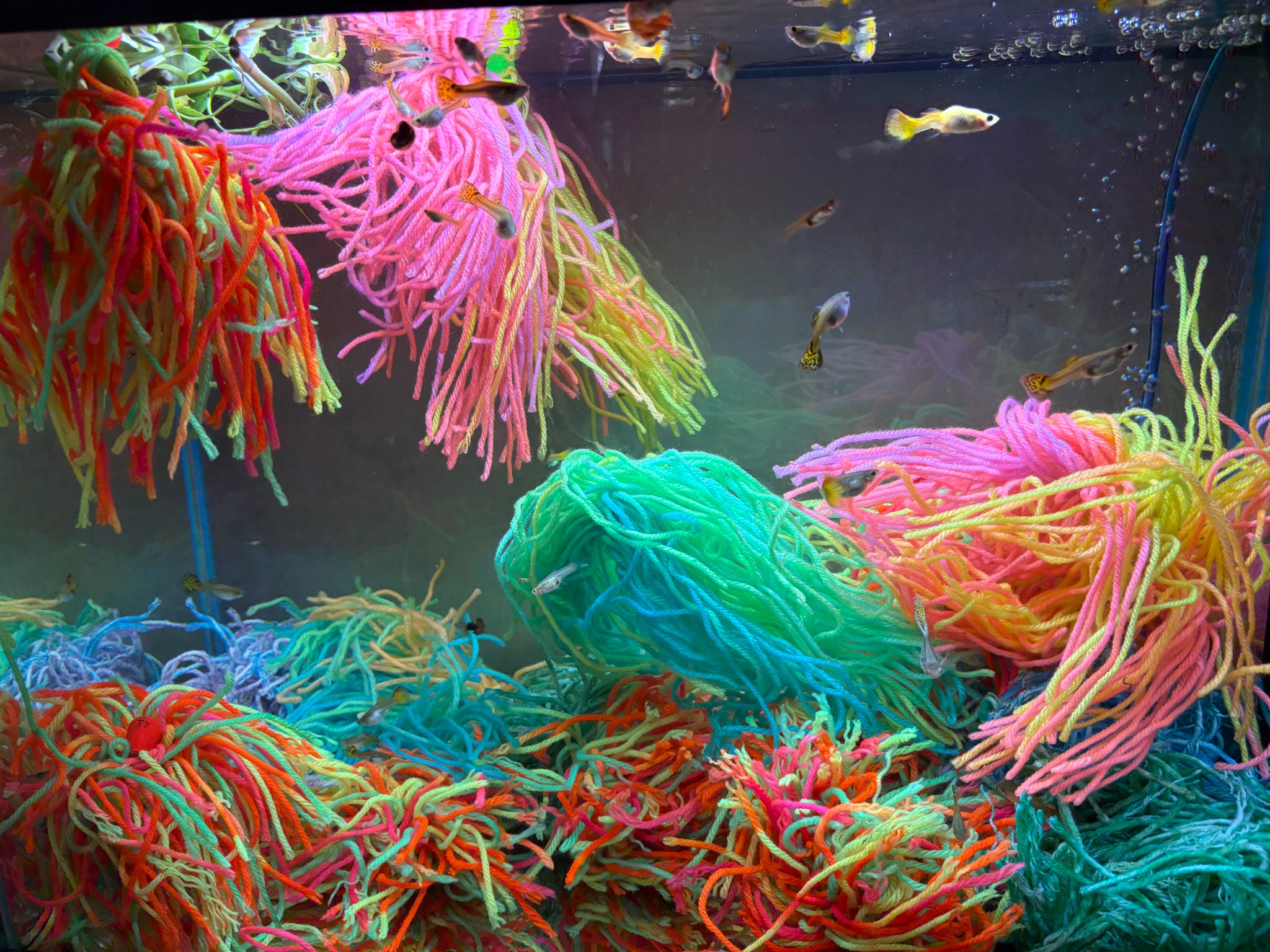
More strands mean more surface for natural grazing. AquaNest spawning mops give aquarium biofilm many places to grow, alongside soft cover for fry, fish and shrimp. They are easy to lift out, gently clean and reuse.
How biofilm grows naturally
In an established aquarium, microorganisms attach to submerged surfaces and build a thin living layer. This community can include bacteria, microscopic algae and other tiny organisms, with organic particles caught among them. It develops on plants, rocks, glass and mop fibers as the tank matures. A new mop needs time to become colonized; it does not arrive with a ready-made food supply.
Why spawning mops offer so much surface area
Each strand has surface all the way around it and along its length. A mop brings many strands together in a small footprint, creating numerous attachment sites for biofilm. Let the fibers relax and spread underwater so animals and circulating water can reach between them. The yarn provides the growing surface; the acrylic itself is not food.
Natural food for shrimp, fish and fry
Grazing shrimp pick at the living coating on established surfaces. Some fish and fry also forage for tiny organisms among the strands, depending on their species and size. A mature mop can put grazing opportunities close to cover, where small animals spend time.
Is biofilm better than fish food?
Biofilm offers a natural advantage: grazing between meals, right where your animals explore and shelter. Pair these living surfaces with suitable shrimp food and species-appropriate fish and fry foods for a varied diet. The amount and nutritional value of biofilm vary, so keep regular feeding tailored to your animals.
Start with a stable aquarium
Only add mops to stable, established tanks. Keep appropriate filtration, water movement and routine water testing in place. Mops add habitat and colonization surfaces; they do not fix an uncycled or unhealthy aquarium. Check our FAQ and species compatibility guidance before choosing a setup.
Help the fibers relax or the mop sink
Before first use, rinse the empty mop in clean, dechlorinated water. Hold it underwater and gently squeeze and release the yarn repeatedly until no more air bubbles emerge. Work through the bundle so trapped air can escape, then spread the strands and allow them to relax naturally. A fully wetted non-floating mop can settle lower or be positioned with its suction cup. A floating mop has a foam float and is designed to stay near the surface. Never squeeze a mop containing eggs or animals.
Easy to keep clean
Mops are easy to keep clean in a stable, well-maintained aquarium. Like other items in your tank, they may collect a little everyday debris, which usually comes away with a gentle swish in removed aquarium water. How often they need a rinse depends on feeding, stocking and water flow. Natural biofilm on the fibers is a useful grazing surface, not a reason to scrub them spotless.
For easy routine cleaning, inspect for eggs, fry and shrimp, then gently swish an empty mop in removed aquarium water. This lifts loose debris while retaining more of the established surface community than disinfection. Avoid soap, detergents and household cleaners. See our cleaning and long-term care guide.
Made to clean and reuse
We have had mops last over two years in our own aquariums. Lifespan varies with handling, cleaning and the animals in the tank. Inspect the center tie and fibers regularly, and replace a mop with loose fibers, damage or tangles that cannot be safely resolved.
Shop AquaNest spawning mops · Read our shrimp-focused biofilm article · Learn about feeding fry around mops
Further reading: Aquatic Arts on biofilm and grazing and Aquarium Co-Op on appropriately sized fry foods. These describe general husbandry, not product tests.