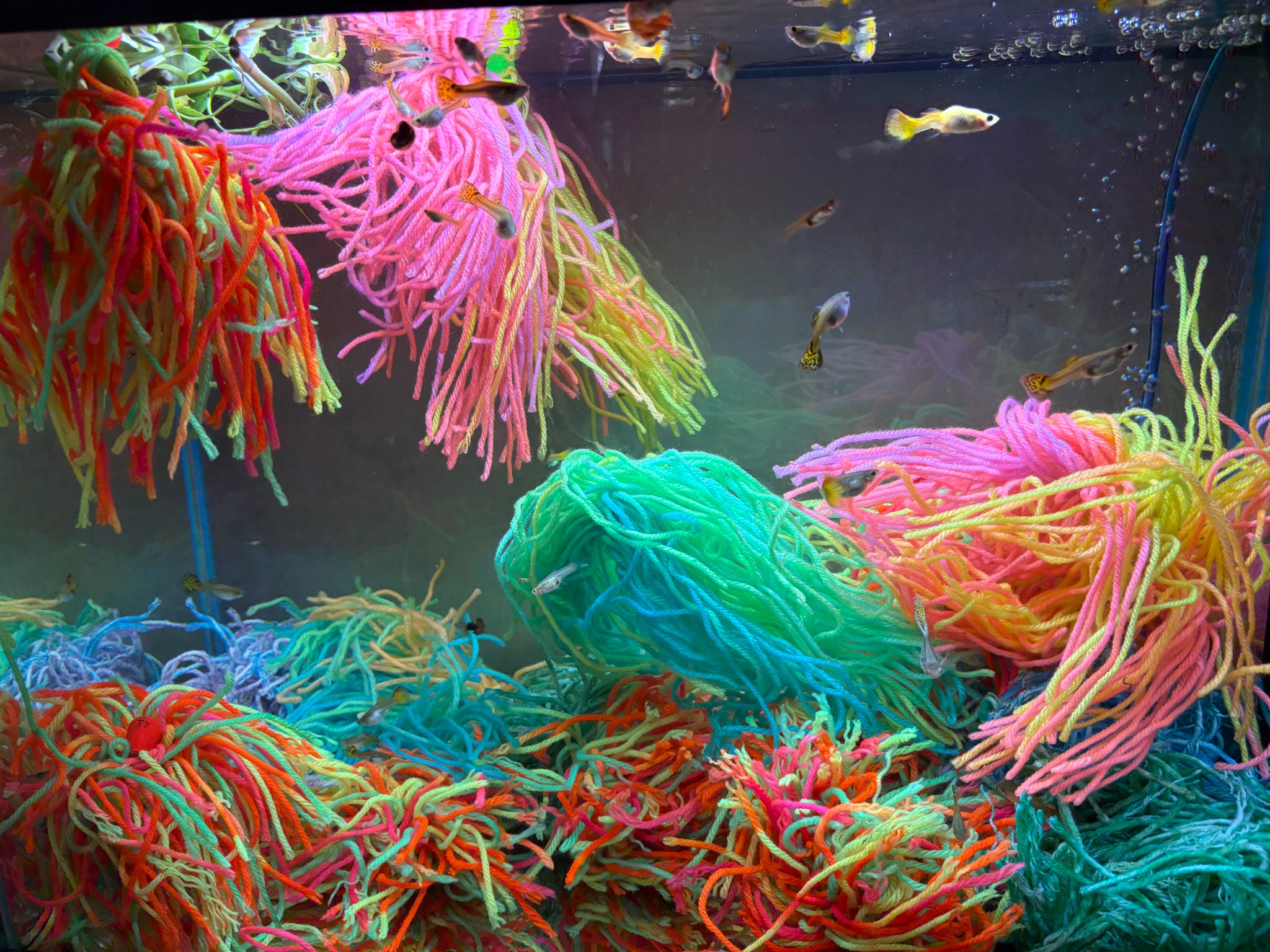
Bring flowing color and movable cover to a suitable koi setup. AquaNest mops give fish something to swim around and investigate, with no rooting, pruning or waiting for plants to grow. Arrange them to suit the size of your koi and leave generous open swimming space.
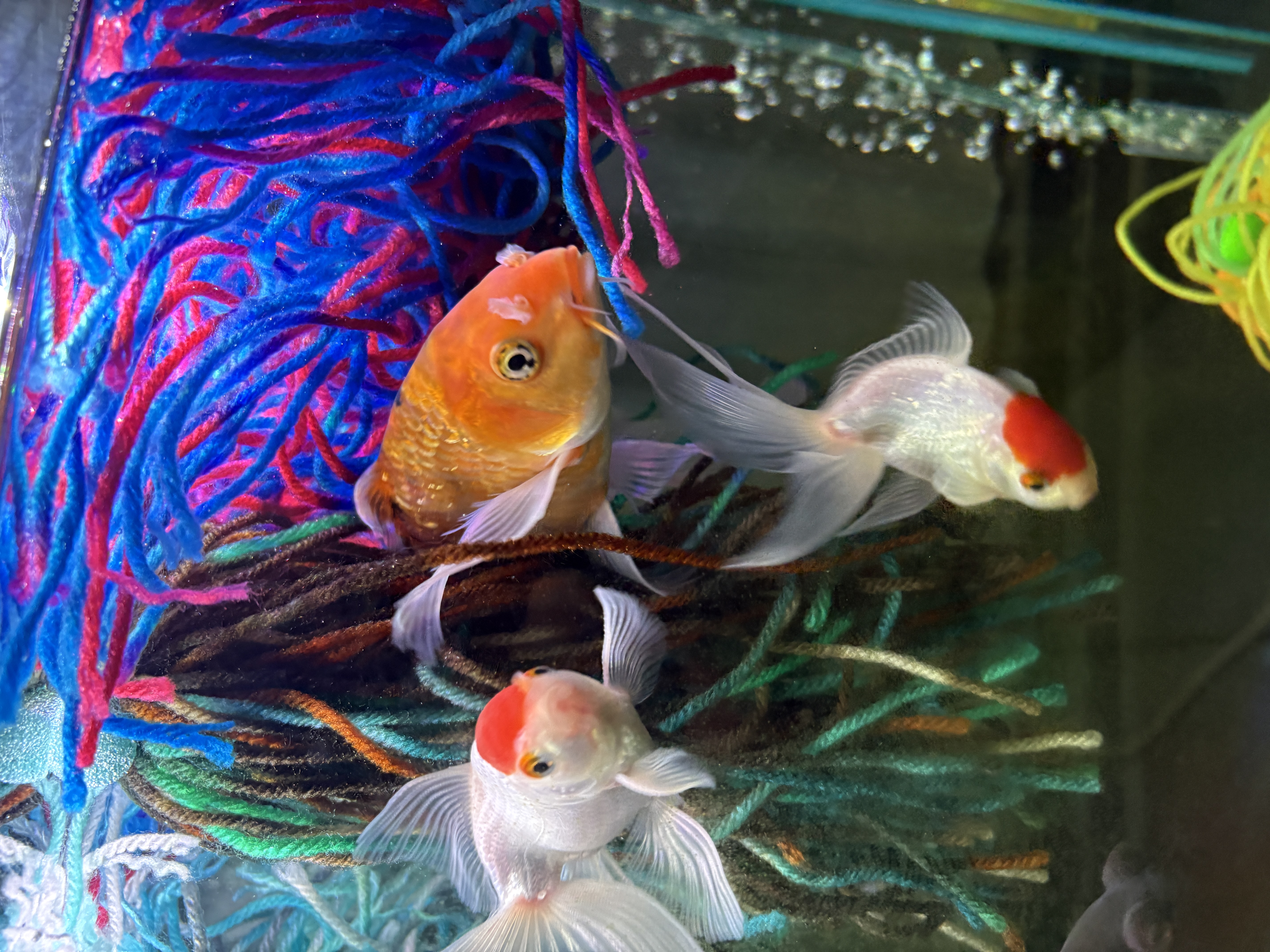
See our mops with larger fish
These pictures and the clip below come from our own aquarium footage. They show the color and movable structure the mops add. Size the layout for your fish: a compact arrangement that works for small fish may leave too little room for a large koi.
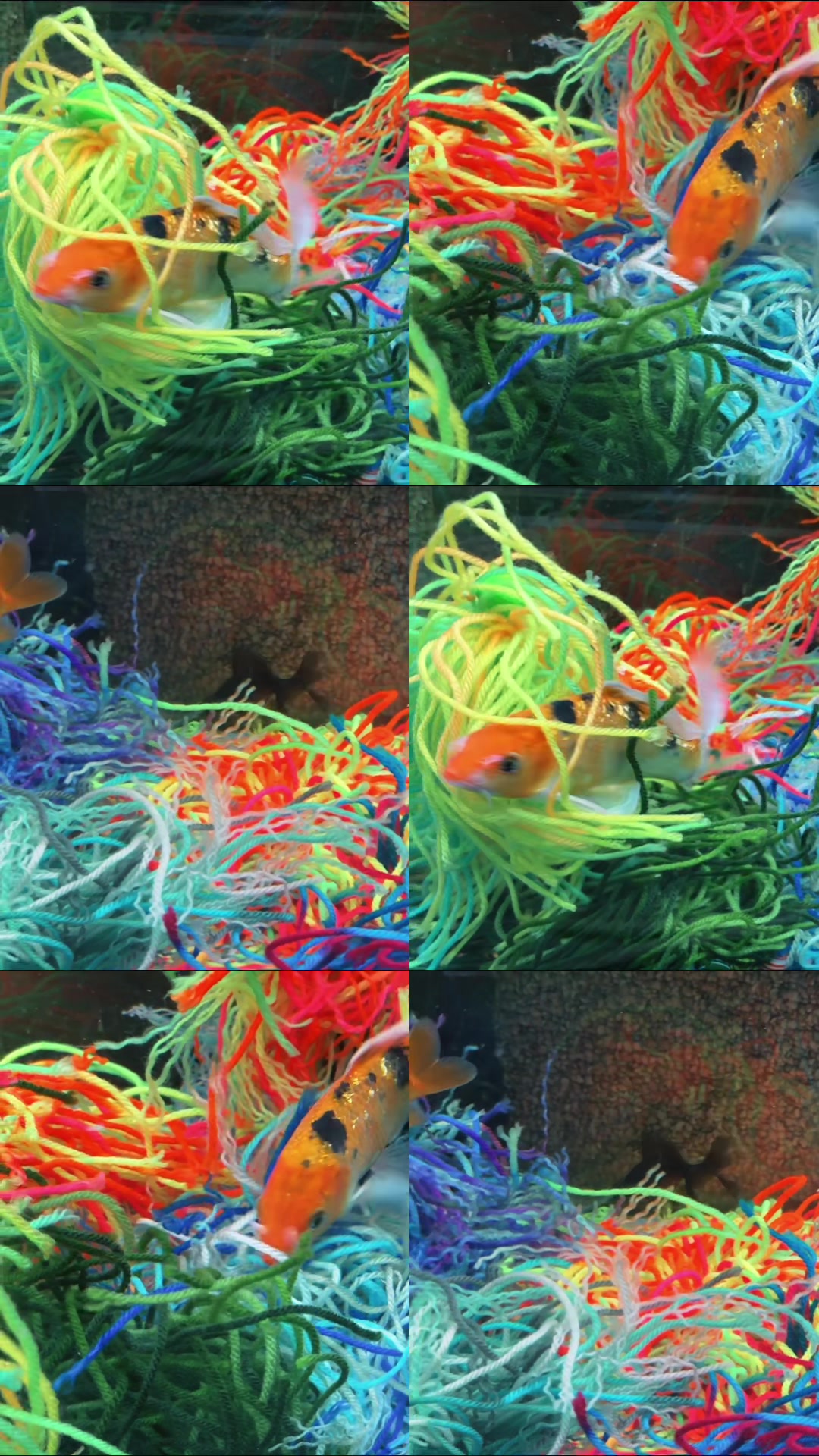
Watch the large-fish clip on TikTok if the player does not load.
Cover you can rearrange and rinse
Use a small group to create a colorful edge or an area for fish to explore. Floating mops hang from the surface. Non-floating mops can be positioned lower after soaking, with the included suction cups helping hold them in place. Each standard mop has approximately 10-inch strands; floating mops also include a float.
For larger koi, keep the strands loose and the gaps wide. Mops add local structure; they do not provide whole-pond shade or predator protection. Watch how your fish use them and remove any mop that catches a fin, becomes tangled or is pulled apart.
Use several as removable bottom cover
In a suitable bare-bottom holding or breeding setup, several non-floating mops can form a removable, substrate-like patch. Start along one side so feeding, swimming and siphoning areas stay open. Allow water to circulate through the strands and keep them clear of drains and pump intakes.
Lift individual mops to clean beneath them instead of moving a fixed bottom layer. This arrangement adds texture and cover; it does not replace a koi pond’s filtration, space or water-quality care. Read our removable bottom-cover guide before choosing your layout.
For breeding, collect eggs separately
Koi are egg layers. Their common-carp relatives deposit adhesive eggs on vegetation and other suitable spawning surfaces. A mop offers strands for egg attachment; breeding success still depends on the fish and their conditions. If you intend to raise young, prepare a separate hatching setup and move an egg-bearing mop there rather than leaving the eggs with hungry adults. See our egg-collection guide.
Easy cleaning, ready for reuse
Check for eggs and animals first. Hold an empty mop at its center tie, gently swish it in removed aquarium water, siphon the exposed bottom and return it to position. Use no soap. Keep egg-bearing mops undisturbed during incubation. See the cleaning steps.
Compare our goldfish layouts and videos, or shop coordinated colors for your own setup.
Breeding background: FAO guidance on egg collectors and common-carp spawning. This explains the breeding method; it is not a product endorsement.