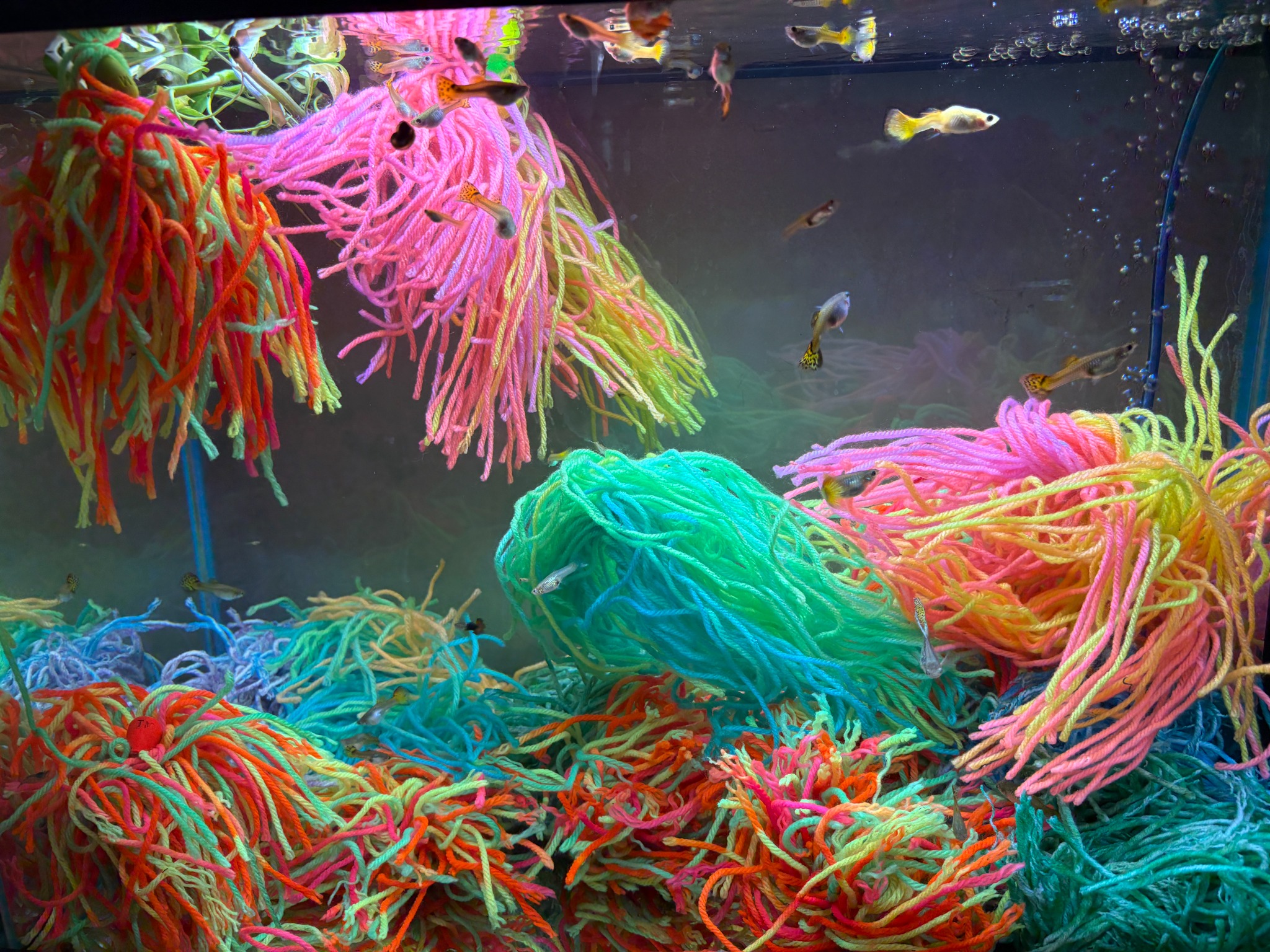
Using Non-Floating Spawning Mops as a Removable Substrate
Use several non-floating mops to add removable bottom cover to a suitable bare-bottom aquarium. Arrange them in patches, lift them to siphon underneath, then rinse and return them. You get color and structure while keeping the glass accessible for cleaning.
This method is especially useful for breeding tanks, fry grow-out tanks, shrimp tanks, or any setup where you want maximum cleanliness and easy access to eggs, fry, or uneaten food.
What “Substrate Mops” Are (And Why They Work)
A non-floating spawning mop is designed to sink (or hover) near the bottom. Once it settles, it functions like a soft substrate:
- Creates a gentle bottom surface fish and shrimp can forage through
- Catches fine debris (like a substrate would), but can be removed and cleaned
- Provides surfaces for beneficial bacteria to colonize on the fibers, similar to any biomedia
- Makes the glass bottom accessible for cleaning when you lift the mops out
Instead of permanently installing sand or gravel, you’re using a removable “mat” of fibers that behaves like substrate, but cleans like equipment.
Key Benefits vs. Sand or Gravel
1) Easy deep cleaning (without a teardown)
Gravel and sand trap waste under and between particles. With mops:
- Lift the mops out
- Siphon the bare glass
- Rinse the mops in old tank water
- Put them back
That’s it. No substrate vacuuming for an hour. There is a reason fish shops use bare bottom tanks, it’s a lot easier to clean.
2) More structure for eggs, fry and shrimp
Fibers create a maze of hiding places and habitat:
- Fry can disappear into the strands away from bigger fish
- Shrimplets can explore the strands and graze on biofilm
- Eggs can stick in protected areas (depending on species)
3) Removable “bio surface” for nitrifying bacteria
The strands provide high surface area. Over time, they become home to:
- Nitrifying bacteria (that convert ammonia → nitrite → nitrate)
- Microfauna and biofilm that small livestock graze on
Important: this does not bypass cycling. Surfaces become colonized as a tank matures, but we have not measured the mops’ filtration capacity. Keep a properly cycled filter running and monitor water quality.
4) Cleaner tank workflow
Bare-bottom tanks are already popular for breeding and grow-out because they’re easy to keep clean. Substrate mops keep that same workflow, while adding:
- Structure
- Softness
- Biological surface area
How to Set Up Spawning Mops as Substrate
Step 1: Choose our non-floating mops
You want mops that will:
- Sink or settle
- Sit low on the glass
- Spread out enough to “cover” the bottom area you want
- Use multiple mops to create coverage.
Step 2: Rinse before first use
Quick rinse in dechlorinated water is usually enough. If you prefer, soak briefly and squeeze a few times to release any loose fibers.
Step 3: Arrange on the tank bottom
NOTE: Mops will likely take several days or more to sink and settle to the bottom. You should squeeze them out under water to remove air bubbles to help get them to sink. Once they are at the bottom you can arrange them how you want. Use included suction cups to help arrange them as needed.
Common layouts:
- Several separated patches of bottom cover (grow-out / shrimp tanks)
- One side mop-substrate, one side bare (easy feeding + easy cleaning)
- Back wall mop zone (hiding and grazing area, front stays open)
Step 4: Run your tank normally and let it cycle
Treat mop-substrate like you would any biological surface:
- Keep filtration running
- Feed lightly at first
- Test ammonia/nitrite during startup
- Expect a normal cycle timeline
Allow the tank and its surfaces to mature. Keep your normal filtration and maintenance routine; mops are additional habitat rather than a rated filter.
Cleaning and Maintenance (The Right Way)
The goal is to remove waste while protecting your beneficial bacteria.
Routine cleaning (recommended)
- During a water change, lift the mops into a bucket.
- Use old tank water to gently swish and squeeze them.
- Siphon/wipe the bare glass bottom.
- Return the mops and refill the tank.
What NOT to do
- Don’t blast them under hot tap water if you’re relying on them for biofiltration.
- Don’t scrub them “sterile clean” every time.
Best practice: rotate deep cleaning (clean half now, half next time) if the mops are a major part of your bio surface area.
Who This Setup Is Best For
Non-floating mop-substrate is a strong fit for:
- Breeding tanks (easy egg/fry management)
- Fry grow-out (hiding, grazing, cleaner feeding)
- Shrimp tanks (biofilm, shelter, easier maintenance)
- Bare-bottom display tanks (clean look + functional structure)
- Hospital/quarantine tanks (removable décor that cleans easily)
A Few Practical Notes
- Debris collection is a feature. The mops will catch fine waste like a substrate does—except you can remove the whole “substrate” and rinse it.
- Surface area helps, but filtration still matters. Spawning mops support biological stability, but they don’t replace a filter nor do they replace real plants. Choose any companion plants for the needs of your aquarium.
- Cycling is still required. The mops become seeded over time, just like any other media.
Choose a layout you can clean
Using non-floating spawning mops as a removable substrate gives you the best parts of both worlds:
- The clean, easy maintenance of a bare-bottom tank
- The softness, structure, and biological surface area of a substrate
You can lift the entire “bottom” out, clean the glass, rinse the mops, and keep going—without fighting sand clouds, gravel traps, or endless vacuuming.
If your goal is a cleaner tank, easier breeding, and a soft bottom that supports beneficial bacteria over a normal cycle, mop-substrate is a simple upgrade that makes maintenance feel like swapping equipment instead of rebuilding your aquarium.